Jan 12, 2026
Geophysical Assessment of Embankment Leakage for Wildlife Habitat and Irrigation
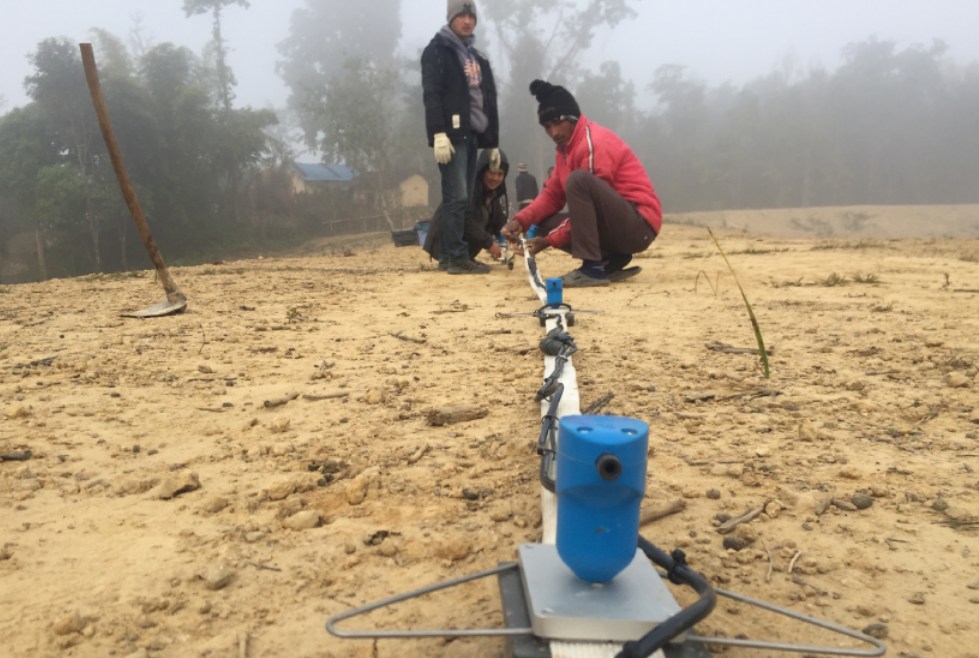
An integrated 2D seismic survey and Electrical Resistivity Tomography (ERT) investigation was conducted in Banke District to assess subsurface conditions and identify potential water leakage zones beneath and around the embankment constructed adjacent to a waterbody.
The primary objective of the embankment is to retain water for wildlife conservation while also supporting irrigation activities in the surrounding areas. However, uncontrolled seepage or leakage can compromise embankment stability and reduce water availability.
The 2D seismic survey was utilized to delineate subsurface stratigraphy, structural discontinuities, and weak zones that may act as preferential pathways for water movement. Complementary ERT profiling provided high-resolution resistivity images to detect saturated zones, seepage paths, and subsurface heterogeneities associated with water leakage.
The integrated interpretation of seismic velocity models and resistivity sections enabled accurate identification of potential leakage zones, assessment of embankment integrity, and recommendations for mitigation and remedial measures. This study supports sustainable water management, embankment safety, and the long-term success of wildlife habitat development and irrigation infrastructure in the region.